Down To Ground DTG Ground 1 — Conductive Rubber Sole & Silver Lined Insole Grounding Sneaker
 Down To Ground ·
☆☆☆☆☆ 0.00 (0 reviews) · In Stock
Down To Ground ·
☆☆☆☆☆ 0.00 (0 reviews) · In Stock
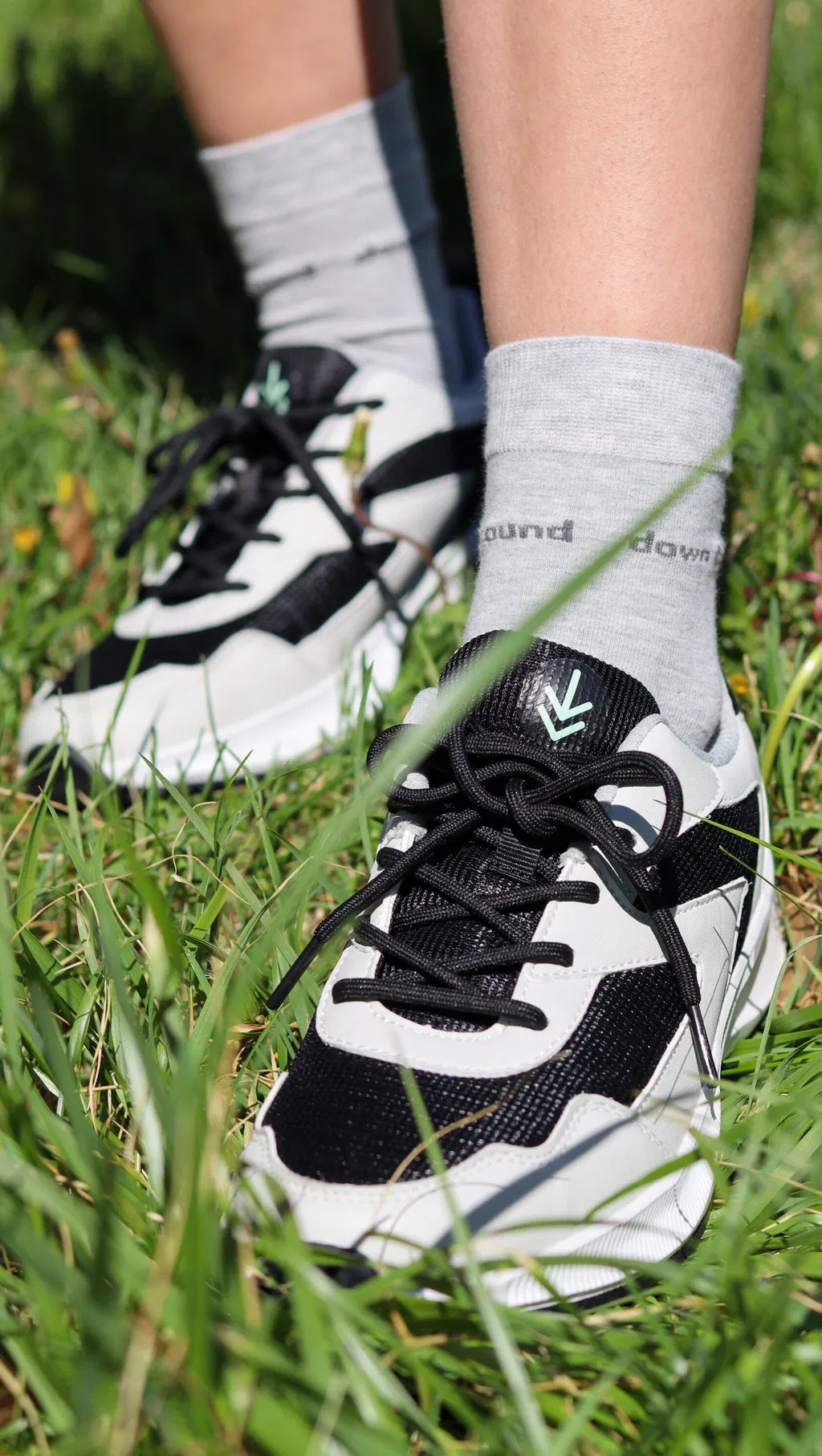
Most grounding shoes get the job done with a single conductive element — a copper rivet in the sole, a conductive leather outsole, a basic conductive plug. The DTG Ground 1 uses two: a proprietary conductive rubber outsole engineered specifically for natural electron flow from the earth, and a precision-woven silver-lined insole that creates a conductive pathway between your foot and that outsole. Two layers of conductivity — one at the ground contact point, one at the skin contact point — ensuring the circuit completes consistently from the earth below to your foot above, regardless of sock thickness or foot positioning in the shoe. At AUD $199 (33% off AUD $300), in a genuine athletic sneaker format that 17 buyers have described as the most comfortable shoes they've ever worn, the DTG Ground 1 is the most technically specified grounding shoe GroundingMatrix has reviewed and the only one in the index with a dual-layer conductive architecture.
Highlights
- Dual-layer conductive architecture — proprietary conductive rubber outsole at ground contact AND silver-lined insole at foot contact — the most engineered grounding shoe in the GroundingMatrix index
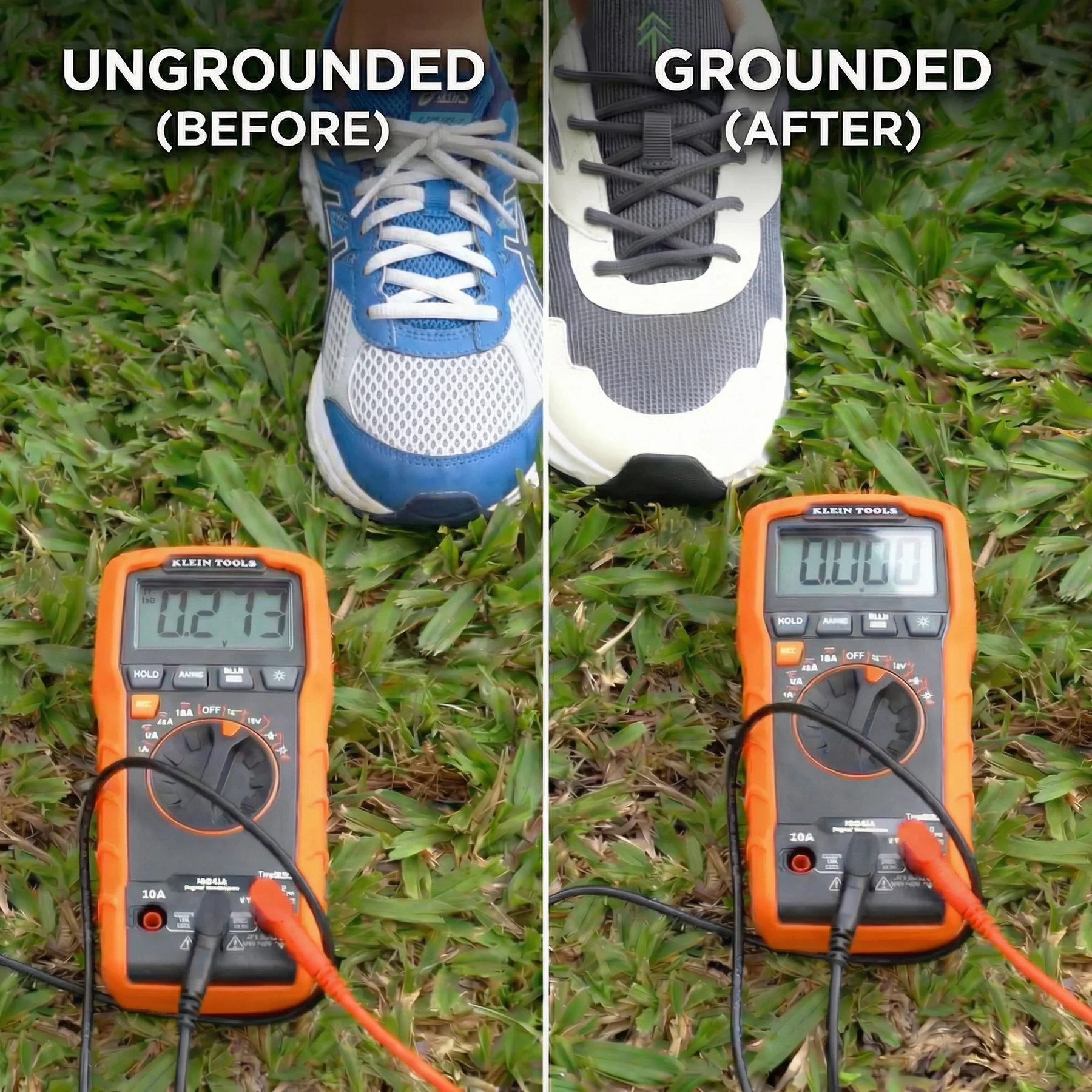
- Conductivity independently verified by a buyer using a multimeter — "checking with a multimeter if it works and it does which is insane to me"
- 17 verified reviews at 100% five-star — including reports of eliminated foot pain, reduced leg swelling, and improved inflammation from extended daily wear
- Silver-lined insole creates a conductive pathway from outsole to foot — faster circuit establishment and more consistent grounding regardless of sock type
- Silver insole's natural antimicrobial properties reduce odour buildup during extended daily wear
- Genuine athletic sneaker format — 316 grams, 10mm heel-to-toe drop, responsive cushioning and structured support for all-day comfort
- Runs true to size — True Fit Guarantee: free size exchange if sizing isn't right
- Available in Gray and Black across US M5.5/W7 to US M10/W11.5
- AUD $199 (33% off AUD $300) — also available in CAD, GBP, and USD at checkout
- Free shipping worldwide from Down To Ground
- Grounding Guarantee applies alongside the True Fit Guarantee
- Verified beneficial for buyers with lipoedema, foot inflammation, and leg swelling from extended daily standing
- GroundingMatrix recommended as the most technically specified grounding shoe in the index for buyers wanting dual-layer conductivity verification
Overview
Why Most Grounding Shoes Have a Single Conductive Element — and Why This One Has Two
GroundingMatrix covers grounding footwear across several brands in our Grounding Footwear category. The standard approach across most products is a single conductive element — a copper rivet set into the sole, a conductive leather outsole, or a basic conductive plug — that bridges the insulating gap between the ground and the foot. It works. The earth connection completes through that single pathway and grounding occurs.
The DTG Ground 1 takes a different engineering approach. There are two conductive layers rather than one: a proprietary conductive rubber outsole at the ground contact point, and a precision-woven silver-lined insole at the foot contact point. The outsole touches the earth with every step. The insole touches your foot — or your sock — continuously. Together, they form a complete conductive pathway from ground to skin that doesn't depend on a single conductive plug making reliable contact through a thick outsole or through the full thickness of the shoe's midsole.
GroundingMatrix considers this dual-layer architecture the most engineered approach to conductive footwear in the index — and the one most likely to maintain reliable conductivity across different sock thicknesses, foot positions, and wear conditions over the lifespan of the shoe. One verified buyer specifically confirmed this with a multimeter — "checking with a multimeter if it works and it does which is insane to me" — which is the most direct verification of conductivity GroundingMatrix expects from any grounding product and the kind of buyer-initiated testing that tells us more than the product page alone.
The Conductive Rubber Outsole — What "Proprietary" Actually Means Here
Standard shoe outsoles are made from rubber compounds specifically formulated to be electrically insulating — because insulation between the foot and the ground is, for most footwear applications, desirable. It prevents static buildup during electrical work, protects from accidental contact with live electrical sources, and keeps moisture from the ground away from the foot.
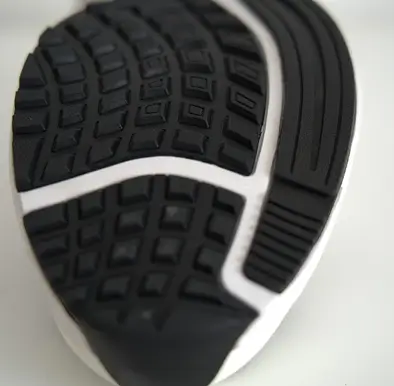
A conductive rubber outsole requires a fundamentally different formulation. The rubber compound needs to conduct electrons rather than block them — which means incorporating conductive elements (typically carbon black compounds or metal particles) into the rubber matrix in a way that creates a continuous conductive path through the outsole's full thickness without compromising the rubber's durability, grip, or flexibility characteristics that make it functional as footwear.
Down To Ground describes this as their "custom-engineered" conductive rubber outsole — a proprietary formulation specific to the DTG Ground 1 rather than an off-the-shelf conductive rubber. GroundingMatrix presents this at face value from their product documentation. What GroundingMatrix can verify independently, through the buyer multimeter confirmation and the consistent review reports of reduced foot pain, swelling, and inflammation, is that the outsole appears to be conducting effectively in real-world use conditions.
The Silver-Lined Insole — The Component That Makes the Difference for Sock Wearers
The silver-lined insole is the component that most distinguishes the DTG Ground 1's architecture from single-element grounding shoes, and it addresses a specific practical challenge that all grounding footwear faces: socks.
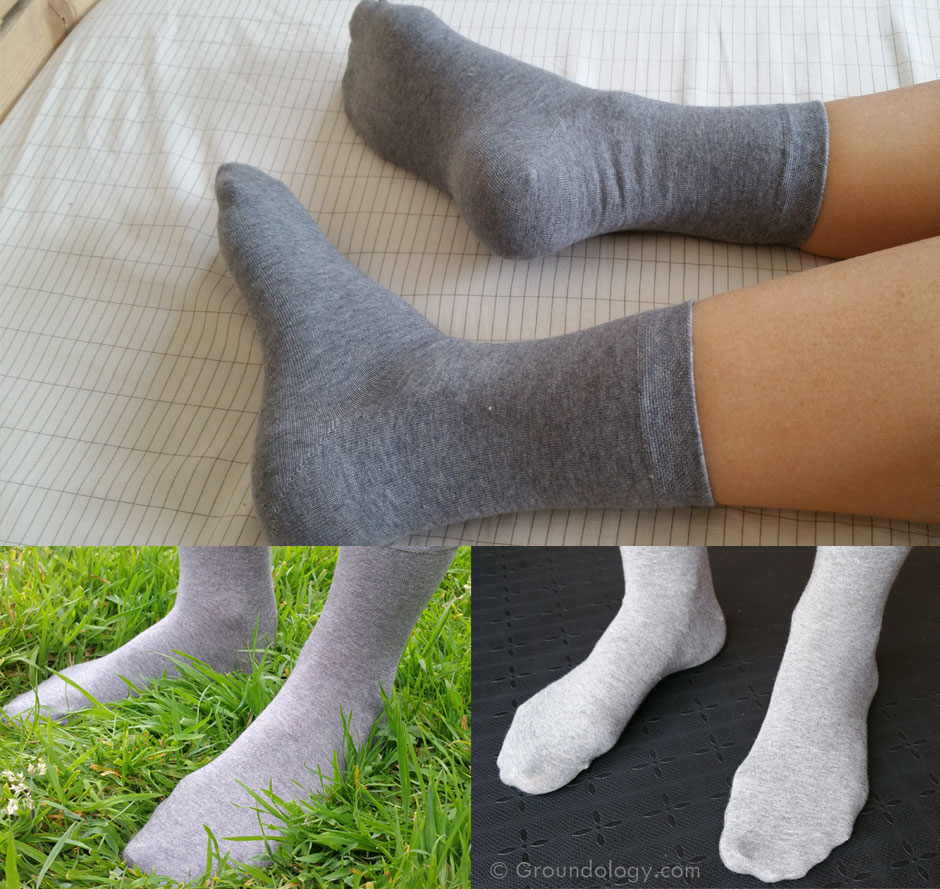
Most grounding shoes ground through a conductive element in the outsole. For the circuit to complete to the skin, conductivity has to pass through the sock — relying on moisture buildup in the sock fabric to create a conductive channel through the material. This works eventually, but it's slower to establish and less consistent than direct contact, particularly with synthetic socks that don't absorb moisture the way natural fibres do.
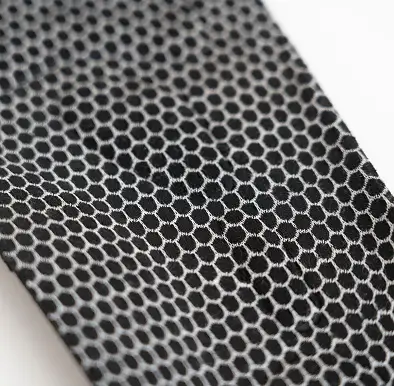
The silver-lined insole creates a different situation. Rather than the conductivity needing to travel from the outsole all the way up through the sock to the skin, it travels from the outsole to the insole surface — a much shorter pathway through less material. The insole surface is then in direct contact with the bottom of the sock, and the silver lining's conductivity passes through the sock to the foot using the same natural fibre conductivity mechanism — but from a surface that's already conducting rather than from a single buried plug. The result is a more reliable, more consistent, and faster-establishing grounding connection regardless of sock type.
Silver's natural antimicrobial properties are the secondary benefit of the silver insole lining — reducing odour-causing bacterial growth in a component that's in continuous contact with a warm, damp environment (the inside of a shoe during extended wear). A grounding insole that also stays fresher between washes than a standard insole is a practical everyday advantage that the silver material provides without any additional product engineering required.
An Athletic Sneaker, Not a Minimalist Barefoot Shoe
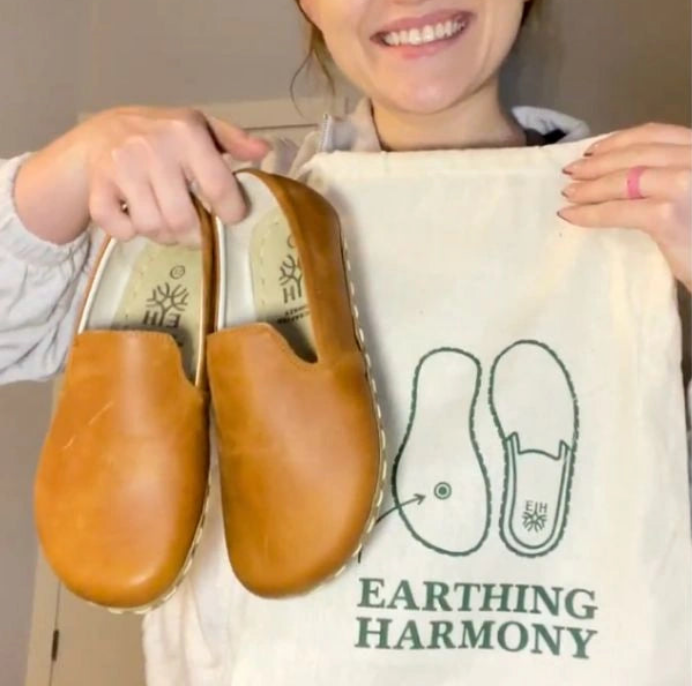
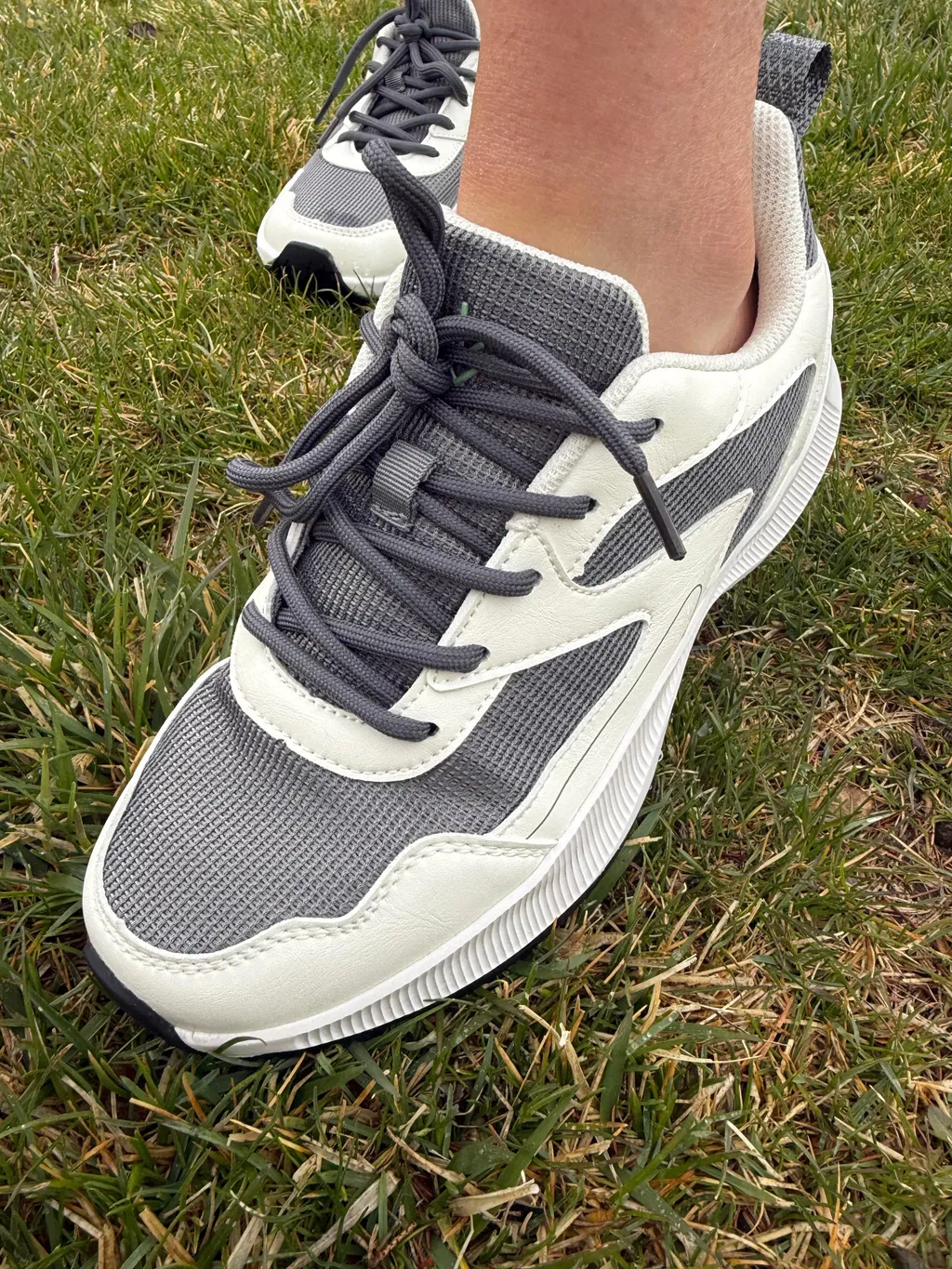
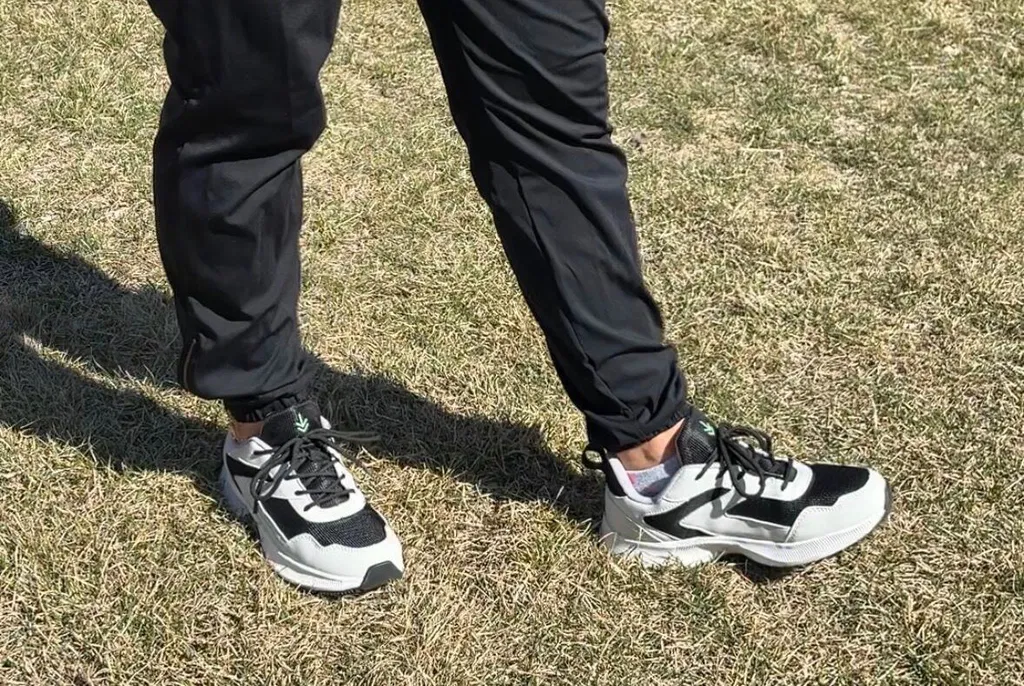
GroundingMatrix covers grounding footwear across multiple construction types. The Earthing Harmony slip-ons are leather construction with a water buffalo leather sole and a barefoot-style minimalist design. The DTG Ground 1 is a different format entirely — a genuine athletic sneaker with responsive cushioning, a 10mm heel-to-toe drop, structured support, and a 316-gram weight per shoe that sits in the lightweight athletic shoe category rather than the minimalist/barefoot category.
This matters for buyers trying to understand which product fits their lifestyle. The DTG Ground 1 is designed for all-day wear — walking, working, light exercise, everyday movement. It has the cushioning and support structure that makes extended wear comfortable on hard surfaces, in urban environments, and across varied terrain. It does not have the ultra-thin, flexible sole of a dedicated barefoot shoe, and buyers accustomed to cushioned athletic footwear will find the transition to DTG Ground 1 more immediate and comfortable than transitioning to a minimalist barefoot design.
The verified buyer Shannon's review captures this directly: "I've been wearing the Ground 1's for a couple months now — they are so lightweight and I can tell they are good quality. My feet don't hurt anymore when I'm walking around even for hours on end. I come home at the end of a long day on my feet, and where normal shoes would have made my feet sore and swollen, these don't at all." This is the experience of someone using the shoe in its designed context — extended daily wear — and finding that the combination of grounding and good athletic shoe construction produces a meaningfully different result from standard footwear.
The Lipoedema Review — Worth Flagging Specifically
One verified review on Down To Ground's product page stands out to GroundingMatrix as particularly credible for a specific reason: Jacqueline Craig discloses that she has lipoedema — a chronic condition involving abnormal fat accumulation in the legs and ankles, typically associated with persistent swelling, inflammation, and sensitivity to pressure. She notes that wearing the DTG Ground 1 regularly has "really improved" swelling and inflammation in her legs and ankles as a result of the grounding benefit.
GroundingMatrix presents this as a genuine verified report rather than a guaranteed outcome for everyone with similar conditions. What makes it credible beyond the specific diagnosis disclosure is the context: Jacqueline also notes she has been sleeping grounded for a year and felt benefits, and is adding the shoes specifically to extend grounding into daytime hours — the same logic GroundingMatrix covers in our timing guide for maximising total daily grounded hours. A buyer using grounding systematically across multiple touchpoints and reporting specific, measurable improvements in a diagnosed condition is the type of feedback GroundingMatrix considers most informative alongside the peer-reviewed research.
Sizing — True to Size With a Free Exchange Guarantee
Down To Ground states the DTG Ground 1 runs true to size and backs this with a True Fit Guarantee: if the shoes don't fit, exchange for a new size for free. GroundingMatrix considers this a meaningful commitment for an online shoe purchase where buyers can't try before buying — it removes the sizing risk that often deters buyers from purchasing footwear online, particularly at the AUD $199 price point.
The shoe is available in a unified sizing system covering both men's and women's US sizes — from US M5.5/W7 up to US M10/W11.5 — with a chart available on the product page. Both Gray and Black colourways are available across the full size range.
What It Works On — and What It Doesn't
As with every grounding footwear product GroundingMatrix reviews, the DTG Ground 1 grounds you on genuinely conductive natural surfaces: grass, bare soil, sand, and damp or unsealed concrete. These are the surfaces that maintain a continuous conductive connection to the earth beneath them and allow the electron transfer to complete through the shoe's outsole to the insole and into your foot.
Sealed asphalt, painted concrete, dry indoor flooring, and most urban paved surfaces don't complete the circuit regardless of the shoe's conductivity specification, because the surface itself is insulating against the earth beneath it. The DTG Ground 1 is designed for the outdoor walking context — walks on natural ground, gardens, parks, grass areas, beaches — where conductive surfaces are accessible during normal daily activity.
What's in the Box
- 1x pair DTG Ground 1 Grounding Shoes (colour and size as selected)
Free shipping from Down To Ground. Available in Gray and Black colourways. AUD $199 (33% off AUD $300). CAD, GBP, and USD pricing available at checkout. True Fit Guarantee — free size exchange if they don't fit. Grounding Guarantee on all Down To Ground products.
Care Instructions
Wipe the outsole clean after use on muddy or wet ground — accumulated mud or wet debris on the outsole reduces conductivity by insulating the conductive rubber from the ground surface. Clean the insole with a damp cloth as needed and allow to dry fully before wearing — the silver lining's antimicrobial properties reduce odour buildup but regular light cleaning maintains hygiene and conductivity at the insole surface. Do not machine wash. Avoid extended submersion.
GroundingMatrix publishes independent editorial content for informational purposes. Individual results may vary. This product is not intended to diagnose, treat, cure, or prevent any disease. Consult a qualified healthcare professional before making changes to your health or wellness routine.
Specifications
| Product Type | Grounding / Earthing Athletic Sneaker |
| Brand | Down To Ground |
| Conductive Layer 1 | Proprietary conductive rubber outsole — custom-engineered for natural electron flow |
| Conductive Layer 2 | Precision-woven silver-lined insole — conductive pathway from outsole to foot |
| Conductive Architecture | Dual-layer (outsole + insole) — unique in the GroundingMatrix grounding footwear index |
| Shoe Weight | 316 grams per shoe |
| Heel-to-Toe Drop | 10mm |
| Available Colours | Gray, Black |
| Available Sizes | US M5.5/W7 through US M10/W11.5 (unified men's/women's sizing) |
| Sizing Guidance | True to size — order normal size |
| Size Exchange | Free — True Fit Guarantee |
| Effective Grounding Surfaces | Grass, soil, sand, damp/unsealed concrete |
| Non-Effective Surfaces | Sealed asphalt, painted concrete, most indoor flooring |
| Sock Compatibility | Works through natural-fibre socks — silver insole bridges the gap |
| Multimeter Verified | Yes — buyer-confirmed conductivity via multimeter test |
| Price | AUD $199 (was AUD $300 — 33% off) |
| Currency Options | AUD, CAD, GBP, USD |
| Shipping | Free worldwide |
| Guarantee | Grounding Guarantee + True Fit Guarantee (free size exchange) |
| Verified Reviews | 17 at 100% five-star |
How to Use
Frequently Asked Questions
Why does this shoe have two conductive layers when most grounding shoes just have one?
A buyer said they tested it with a multimeter — can I do the same, and what should I look for?
I stand for 8-10 hours a day at work — are these designed for that kind of extended wear?
How do these compare to the Earthing Harmony slip-on shoes also listed on GroundingMatrix?
Can I wear these to the gym or for running?
Will these work through thick athletic socks?
I live in Canada — does Down To Ground ship here and what currency does it charge?
What surfaces do I actually need to walk on for these to work — can I use them in my backyard?
Customer Reviews
No reviews yet. Be the first to share your experience.
Write a Review
- SKU
- GM-DTG-GROUND1-[COLOR]-[SIZE]
- Material
- Proprietary conductive rubber outsole — precision-woven silver-lined insole — athletic sneaker construction
- Dimensions
- Available US M5.5/W7 through US M10/W11.5 — 316 grams per shoe — 10mm heel-to-toe drop